
About Me

- Beaver Shaw
- Nairobi, Kenya
- I an ex member of both 7 and 8 Squadron's of the Rhodesian war spending most of my operational time on Seven Squadron as a K Car gunner. I was credited for shooting down a fixed wing aircraft from a K Car on the 9 August 1979. This blog is from articles for research on a book which I HAVE HANDED THIS MANUSCRIPT OVER TO MIMI CAWOOD WHO WILL BE HANDLING THE PUBLICATION OF THE BOOK OF WHICH THERE WILL BE VERY LIMITED COPIES AVAILABLE Contact her on yebomimi@gmail.com The latest news is that the Editing is now done and we can expect to start sales and deliveries by the end of April 2011
Wednesday, July 23, 2008


Tuesday, July 22, 2008
Dave Curwen
A photo from Nick Goodman of Willem Joubert, Nick Goodman and Dave "Killer" Curwen -Dave was a nut but one could not help liking the ex "Greengrocer Pom". Dave joined the SAAF after serving in Rhodesia and probably drove the Slopes nuts!!!!


Monday, July 21, 2008
SQUADRON CHARACTERS
Kerry Fynn (pilot) killed in mid -air collision during a contact near Selukwe -an ex game ranger Kerry was a true Rhodesian and a good friend.

Flt Lt Kevin Pienke - a great guy excellent pilot and friend -Kevin left 7 Squadron and was killed on active service while doing a bombing run in a Canberra in Mocambique -his crash site was recently found and a small memorial service held -the story in Choppertech

Squadron Leader Harold Griffiths my Squadron O/C on joining 7 Squadron -he took us for our basic gunnery course together with John Blythe Wood at Kutanga bombing range -the only photo I have of him

W/O Geoff Dartnall my 7 Squadron W/O prior to Barry Ord taking over 

Ray Bolton pilot, Ray was involved in the helicopter mid air collision just outside Selukwe during a contact with ZANLA terrorists and was the only crewmwn to have survived the crash -saved by his armoured seat and a ditch.

Ian Harvey -7 Squadron Flight Commander and instructor who held the most hours on Alouettes. Ian became Robert Mugabes helicopter pilot after the war. He was a mine of information about Rhodesia and Rhodesian military history and was great fun in the pub. 

Flight Sergeant Butch Graydon one of the senior Techs when I joined 7 Squadron a good operator

Flight Sergeant Bert (Bulbous Bert) Keightley a good friend

Greg Todd a pilot and excellent operator in the bush

Fligh Sergeant Henry Jarvie was one of the great characters on 7 Squadron and kept everyone busy with all his antics. Henry was killed in action while on a Fireforce call -out with Norman Maasdorp in 1979.

Bill Sykes a pilot on 7 Sqn who wrote the book A Pride of Eagles

Flight Sergeant Doug Sinclair -Doug was in charge of me on my first bush trip the story in Choppertech

Nick "The Greek" Tselentis Choppertech looking like a big game hunter while on Fireforce ops with Support commando -Nick was a good friend and the two of us enjoyed many a winters night in the Airmens Mess at New Sarum enjoying a pint of Castle sitting near the fireplace in the bar and listening to his incredible collection of long playing records with another friend Rob O' Maker.

Pete Le Roux and Beaver Shaw -Inyanga Downs -I cant say that I enjoyed our stay at this Army Base as the browns were very into playing soldier and making us eat in different messes etc.. Our G Car had electrical problems while doing a Camp cruise organised by PB, I am wearing a new pair of Bata boots given to me by a dead ZANLA terrorist

Beaver Shaw, Pete Caborne, Rob Nelson and Johnny Jacobs Grand Reef 1977

An early picture of Dave Rowe who was an instructor on Seven Squadron by the time I had arrived -Dave was injured in the hand from ground fire while on operations and was assisted by his Tech Brian Warren in landing the helicopter, Brian manipulated the collective lever.


Roger Watt (above) 7 Sqn. pilot was flying with Rob Nelson when their helicopter was hit by ground fire by a group of terrorists they had been following up on. A tracer round ignited thier fuel tank resulting in an intense fire on board the helicopter, this resulted in Rob jumping out of the helicopter as Roger attempted to put the stricken helicopter down. Rob was killed and Roger survived with bad burns -this story is in Choppertech.
Trevor Baynham Chopper pilot of note -don't let the boyish looks here fool you!!!

Willie Knight -I did my first bush trip with Willie and was involved in the Battle of Bangala -this story where the SAS lost some good men is recorded in my book Choppertech.

Grand Reef -Keith "Pops" Rayne, Beaver Shaw, Mario Venutti and Monty Maughn about 1977

JR Blythe-Wood - early photograph JR was a K Car pilot of note and also flew Hawker Hunters with distinction. JR also flew in the Yellow Submarine operations in The Russian Front. 

A younger version of Mike Mulligan -I love the blackboard!!!

Mark Jackson front with Chas Goatley wearing flak vest -Chas and I flew many missions together during the war, he was an excellent and very agressive operator -Chas and I were involved in shooting down the BDF Defender in 1979


Gary Carter killed in wirestrike accident with Paddy Bate and Major Bruce Snelgar 1979. Gary was my course 31LAR and also lived next door to me in Hatfield Salisbury.

Norman Maasdorp known to us as Bam Bam (below)

I will add on new characters as I get new material to publish
R and R
Anette Faint, Beaver Shaw and Dot Faint in the Sergeants Mess New Sarum 1979 -with my hair so long from being constantly in the bush I was lucky not to run into Barney Barnes. I shared a "Mess" in Hatfield with Spook Annandale, Mike Firetag, Nick Goodman and Colin Ross.Anette also shared the Mess with us for a while.

Photos of Airmen on rest and recuperation
FORWARD AIRFIELDS
Lynx Grand Reef 1976 -note prior to tarring the hardstanding

Grand Reef Blues pub -Henry Jarvie extreme left clowning again! Photo ORAFS

Overhead FAF 1 Wankie

Mtoko -heading to Ops Room (below)

Dick Paxton and Chris Joubert below Grand Reef -trust Dick to hide his face

I will be adding pictures and info on RHAF Forward Airfields here from time to time as I get more info and material
RAF SUPPLYING MISSILES TO ZAMBIA CARTOON
Meintjies cartoon of a Rhodesian Air Force Vampire forcing the RAF to land with thier cargo ot Rapier missiles bound for the Zambian Air Force. 

SURVIVAL JERKINS
RHODESIAN AIR FORCE AIRCREW SURVIVAL JERKIN


STANDARD SCALE OF EQUIPMENT TO BE CARRIED BY ALL HELICOPTER CREWS IN SURVIVAL JERKINS
Copy of a circular sent to Seven Squadron members circa 1978.
It is proposed that the existing survival jerkins be scrapped and replaced by a stronger canvas version more in the form of webbing. The replacement version will do away with buttons and Velcro and instead pouches will be secured with metal studs. The front will be secured with metal rings thus ensuring that the jerkin will not open of its own accord so would be the case of Velcro.
Provision for two water bottle pouches will be made. A pistol holster will not be incorporated in the replacement jerkin and instead it is to be mandatory for helicopter crews to be issued with pistol holsters and belts. It will then be mandatory for pistols to be worn at all times in the bush. This situation will assist in improving base security.
Regrettably it is impossible to issue all pilots and techs with the full standard requirement of kit to be carried in the jerkins. The aim is for all helicopter pilots to be fully equipped and for techs to get together as much of the kit as possible. Obviously a downed crew will stick together if possible so that for rescue purposes, it will be known what the standard survival equipment that crew has in its possession.
As regards 7 Sqn aircraft, the standard aircraft packs to be removed and the crews of these aircraft are only to carry the standardized survival jerkin. 8 Sqn. Aircraft are more likely to be involved in long range external operations and as a result these aircraft will continue to be equipped with aircraft survival packs.
Listed below is the standardized scale of kit to be carried in survival jerkins. Until such time as the replacement jerkins are in hand it will be necessary to continue in the best possible way with the existing item.
ITEM QTY
RT60B 1
Mini Flares 1pack up
Nite Flying torch 1
Day Nite distress flare* 1
Heliograph* 1
Marching compass* 1
Knife clasp* 1
Label code emergency* 1
Dayglo Panel 32cmx32cm* 1
Personal first Aid Kit 1
Boxes matches* 2
Tablets water purifying 1 bottle
Water bottles 2
FN Magazines 2
NOTE: - The items asterisked are issued together in a sealed plastic pack up on a personal loan basis and it will be an offence to make use of these items unless for obvious emergency


SURVIVAL JERKIN -sent to me by Adrian Rosenberg -we did not normally wear our brevets or nametags on our jerkins in case of capture by the enemy. The maroon nametag denotes that Adrian was from seven squadron as all RHAF Squadrons were allocated a colour. It is also interesting to note that RHAF Helicopter Technician/gunners were not issued with emergency radios in case of being shot down or crashing, they would have to rely on the emergency radio issued to the pilot.
Dick Paxton would always tell me that if we had to force lob and have to leg it in Indian territory he would shoot me in the leg and head off in the opposite direction so that the Gooks could follow my bloodspoor and give him a chance to escape!!!

STANDARD SCALE OF EQUIPMENT TO BE CARRIED BY ALL HELICOPTER CREWS IN SURVIVAL JERKINS
Copy of a circular sent to Seven Squadron members circa 1978.
It is proposed that the existing survival jerkins be scrapped and replaced by a stronger canvas version more in the form of webbing. The replacement version will do away with buttons and Velcro and instead pouches will be secured with metal studs. The front will be secured with metal rings thus ensuring that the jerkin will not open of its own accord so would be the case of Velcro.
Provision for two water bottle pouches will be made. A pistol holster will not be incorporated in the replacement jerkin and instead it is to be mandatory for helicopter crews to be issued with pistol holsters and belts. It will then be mandatory for pistols to be worn at all times in the bush. This situation will assist in improving base security.
Regrettably it is impossible to issue all pilots and techs with the full standard requirement of kit to be carried in the jerkins. The aim is for all helicopter pilots to be fully equipped and for techs to get together as much of the kit as possible. Obviously a downed crew will stick together if possible so that for rescue purposes, it will be known what the standard survival equipment that crew has in its possession.
As regards 7 Sqn aircraft, the standard aircraft packs to be removed and the crews of these aircraft are only to carry the standardized survival jerkin. 8 Sqn. Aircraft are more likely to be involved in long range external operations and as a result these aircraft will continue to be equipped with aircraft survival packs.
Listed below is the standardized scale of kit to be carried in survival jerkins. Until such time as the replacement jerkins are in hand it will be necessary to continue in the best possible way with the existing item.
ITEM QTY
RT60B 1
Mini Flares 1pack up
Nite Flying torch 1
Day Nite distress flare* 1
Heliograph* 1
Marching compass* 1
Knife clasp* 1
Label code emergency* 1
Dayglo Panel 32cmx32cm* 1
Personal first Aid Kit 1
Boxes matches* 2
Tablets water purifying 1 bottle
Water bottles 2
FN Magazines 2
NOTE: - The items asterisked are issued together in a sealed plastic pack up on a personal loan basis and it will be an offence to make use of these items unless for obvious emergency
RAF JAVELINS IN ZAMBIA
RAF Javelin in Ndola Park today


RAF JAVELINS IN ZAMBIA
By Mervyn Blumberg
29 Squadron RAF (Gloster Javelin) deployed from RAF Akrotiri, Cyprus to Ndola to provide air defence following the announcement of Unilateral Declaration of Independence by the Rhodesian government. Air defence radars and ancillary equipment were flown into Zambia by No.114 and No.267 Squadrons (Armstrong Whitworth Argosy). No.29 Squadron returned to Akrotiri in August 1966.
They flew south with a full load of six external tanks, raising a protest from the Egyptian government when they simply overflew Egyptian airspace to get there. Conditions were primitive, with one Javelin losing a Firestreak missile when a nest of termites crawled up the landing gear and ate the solid propellant out of the missile.
Air defence radars and ancillary equipment were flown into Zambia by No.114 and No.267 Squadrons (Armstrong Whitworth Argosy). No.29 Squadron returned to RAF Akrotiri in August 1966.
One of the aircraft from 29 Squadron, XH890, forced landed at Ndola and was damaged beyond economical repair, the aircraft was moved to a children’s playground in Ndola. Photos can be seen below.
Of interest, Salisbury Radar controlled all airspace in the region, after take-off the Royal Air Force flight leader would contact the ‘rebels’ in Salisbury Radar, Salisbury Airport for clearance to fly a border patrol along the Zambia/Rhodesia border.
I was at Ndola airport at least four or five times a week during the squadrons stay in Zambia and I don't know anything about the squadron’s activities in Lusaka. I did some research on the internet and the RAF History does not make mention of Lusaka. I did find a photo, though, taken from someone straddling the cockpit of a Javelin with the old Lusaka terminal in the background. The words LUSAKA are clearly visible on the roof of the terminal. The planes were definitely based in Ndola for the duration, however may have visited Lusaka on a regular basis. After all it took a Javelin approx. 30 minutes to fly there from Ndola to Lusaka.
Excerpt from Time magazine:
"Harold Wilson offered to send a token force—a squadron of R.A.F. fighters and a battalion of the Royal Scots—to the copper belt, some 250 miles north of the dam. Kaunda accepted the air protection (Zambia has only ten military aircraft of its own), but rejected the offer of troops unless they were sent directly to the dam. Into the copper-belt centre of Ndola at week's end swooped ten British Gloster Javelin jet fighters, accompanied by big-bellied Argosy and Beverley transports carrying the squadron's maintenance supplies. A brace of Bristol Britannia turboprop transports arrived at Lusaka itself. To the south, Smith was sardonically amused. "It is in our interest to have law and order maintained in Zambia," he deadpanned in a television interview."
To Quote Air Chief Marshall Sir Jock Kennedy GCB AFC of the Royal Air Force:
“They made telephonic contact with our jets to offer our men best wishes and suggested that it would be fun to meet in the air. Our pilots needed no second invitation. On a few occasions Hunter’s or Canberra’s met the Javelins to fly along the Zambezi River in formation with crews waving and taking photographs of each other”. The odd pilot happened to stop over in Salisbury, allegedly taking leave to visit South Africa. Their passports were never stamped and a number of them met with our Prime Minster, Ian Smith. When, in August 1966, the British Government announced the withdrawal of the Javelin squadron, Rhodesians gave the RAF lads a grand farewell party at Victoria Falls."
29 Squadron RAF (Gloster Javelin) deployed from RAF Akrotiri, Cyprus to Ndola to provide air defence following the announcement of Unilateral Declaration of Independence by the Rhodesian government. Air defence radars and ancillary equipment were flown into Zambia by No.114 and No.267 Squadrons (Armstrong Whitworth Argosy). No.29 Squadron returned to Akrotiri in August 1966.
They flew south with a full load of six external tanks, raising a protest from the Egyptian government when they simply overflew Egyptian airspace to get there. Conditions were primitive, with one Javelin losing a Firestreak missile when a nest of termites crawled up the landing gear and ate the solid propellant out of the missile.
Air defence radars and ancillary equipment were flown into Zambia by No.114 and No.267 Squadrons (Armstrong Whitworth Argosy). No.29 Squadron returned to RAF Akrotiri in August 1966.
One of the aircraft from 29 Squadron, XH890, forced landed at Ndola and was damaged beyond economical repair, the aircraft was moved to a children’s playground in Ndola. Photos can be seen below.
Of interest, Salisbury Radar controlled all airspace in the region, after take-off the Royal Air Force flight leader would contact the ‘rebels’ in Salisbury Radar, Salisbury Airport for clearance to fly a border patrol along the Zambia/Rhodesia border.
I was at Ndola airport at least four or five times a week during the squadrons stay in Zambia and I don't know anything about the squadron’s activities in Lusaka. I did some research on the internet and the RAF History does not make mention of Lusaka. I did find a photo, though, taken from someone straddling the cockpit of a Javelin with the old Lusaka terminal in the background. The words LUSAKA are clearly visible on the roof of the terminal. The planes were definitely based in Ndola for the duration, however may have visited Lusaka on a regular basis. After all it took a Javelin approx. 30 minutes to fly there from Ndola to Lusaka.
Excerpt from Time magazine:
"Harold Wilson offered to send a token force—a squadron of R.A.F. fighters and a battalion of the Royal Scots—to the copper belt, some 250 miles north of the dam. Kaunda accepted the air protection (Zambia has only ten military aircraft of its own), but rejected the offer of troops unless they were sent directly to the dam. Into the copper-belt centre of Ndola at week's end swooped ten British Gloster Javelin jet fighters, accompanied by big-bellied Argosy and Beverley transports carrying the squadron's maintenance supplies. A brace of Bristol Britannia turboprop transports arrived at Lusaka itself. To the south, Smith was sardonically amused. "It is in our interest to have law and order maintained in Zambia," he deadpanned in a television interview."
To Quote Air Chief Marshall Sir Jock Kennedy GCB AFC of the Royal Air Force:
“They made telephonic contact with our jets to offer our men best wishes and suggested that it would be fun to meet in the air. Our pilots needed no second invitation. On a few occasions Hunter’s or Canberra’s met the Javelins to fly along the Zambezi River in formation with crews waving and taking photographs of each other”. The odd pilot happened to stop over in Salisbury, allegedly taking leave to visit South Africa. Their passports were never stamped and a number of them met with our Prime Minster, Ian Smith. When, in August 1966, the British Government announced the withdrawal of the Javelin squadron, Rhodesians gave the RAF lads a grand farewell party at Victoria Falls."
ZAMBIAN RAPIER MISSILES


ZAMBIA was supplied with Rapier missiles by BAE systems in the UK to counter any threat from the Rhodesian Air Force -they also supplied crews and training to the Zambian Government.
Based on a 1964 development programme, Rapier entered service with the British Army and RAF Regiment in June 1967.Rapier is a Hitile, so called because it must hit the target to explode, whereas most SAMs use a proximity fuse which causes the missile to explode near the target, obviating the need for physical contact.The simple design of Rapier meant that it was cheaper than all rivals of broadly similar performance. Controlled by tail control fins and powered by a dual-thrust, solid motor, it was capable of Mach 2.Many configurations of Rapier have been developed and sold throughout the world, including sales to Australia, Iran, Oman, Brunei and Zambia
No Rhodesian Air Force Aircraft encountered these missiles.
Sunday, July 20, 2008
ALAN SHAW MEMORIAL SAS
Alan Locke Shaw


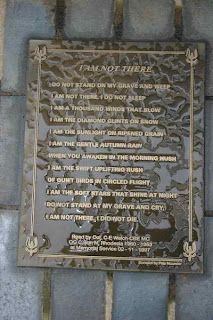


My father served with C Squadron The Malayan Scouts in Malaya 1950-51
This is the SAS memorial in Durban with his plaque inscribed -Dad was one of the many ex Rhodesian servicemen shunned by Britain in his old age
RHAF Alouette 3 Information
ALOUETTE 3 HELICOPTER
Main Rotor Hub and swashplate -drag dampers can also be viewed
Main Rotor Hub and swashplate -drag dampers can also be viewed

Main Rotor Gearbox -Rotor brake and freewheel unit can be viewed left
Tail Rotor Hub and blades


Tail Rotor Hub and blades

Top view Artouste 3B engine (standard configuration and exhaust ejector)

Right view Artouste 3B Engine (standard configuration and exhaust ejector)

Left view Artouste 3 B engine (standard configuration and exhaust ejector)

Left view engine without Elephant ear sand filters (below)

Lower pilots pedestal


 Alouette tech photos kindly donated by Adrian Rosenberg


Colyn James above in Fort Victoria I was flying as his gunner in the K Car-good view of the armoured seat

Alouette 3 Instrument Panel below-note lack of instrumentation for night flying!
 Alouette tech photos kindly donated by Adrian Rosenberg
RHODESIAN AIRFORCE ALOUETTE 3 INFORMATION
The Alouette 3 (first produced in 1961) used in the Rhodesian war was an Aerospatiale SA 316 multipurpose helicopter.
It has a three –blade main rotor system with a fully articulated main rotor head mounted to the top of the fuselage and to the rear of the cabin. The main rotor has a diameter of 36 feet.
The single turboshaft Artouste 3B engine produces 890 shp and is derated to 650 shp and is mounted to the rear of the cockpit and main rotor transmission. (This gave the Alouette very good hot and high performance for that time)
The engine was shrouded with the exhaust gasses deflected into the rotor wash by the Rhodesians to counteract the threat of heat seeking missiles. (During the Rhodesian war we saw three different variants of engine anti Strela shrouds)
The fuselage consists of an oval plexiglassed cabin with a fixed landing gear. The wheeled landing gear was excellent for rolling takeoffs on an airstrip when we flew in hot and heavy conditions.
The tailboom is an aluminum monocoque structure with a vertical and horizontal stabilizer attached. The three bladed tail rotor is mounted on the right hand side of the tailboom and has a prominent tail rotor guard.
Basic weight of the Alouette is around 2600 lbs and maximum weight is 4630 lbs, so if you have a full load of passengers consisting of 1400 lbs including pilot and gunner c/w Browning .303s it allows for around 630 lbs of fuel or around 1.5 hrs endurance with reserve. (The red fuel low warning light came on giving the pilot 13 minutes to put down)
Fuel burn is approximately 360 lbs per hour at sea level which equates to one 44 drum per hour.
Range was 325 nm or 605 km.
A unique feature of the Alouette 3 is the clutch system as it is possible to have the engine running but has the blades stationary, this sounds strange but it is practical as a safety feature to allow loading or unloading of passengers.
(We did not use this feature much on Fireforce as most of the passengers from the FAFs emplaned at the same time as the pilot or we would fly to the bottom of the runway and hot load the troops with rotors running to minimize time as it took some time to wind up the rotors)
Starting the Alouette was easy in comparison with most helicopters as the starting system was controlled by a Mobile block (computer) making it safer to control starting exhaust temperatures which could damage the turbine. One ensured that a main rotor blade was in front of the cabin with blades untied, with the controls in neutral one checked for full and free movement.
Starting was simple firstly one ensured that both the main and rotor brakes were on and the fuel flow lever was fully back. This lever had to be fully back or you would have starting problems. One had to check that the TOT (Turbine outlet temperature) was below 150 degrees C, then switch the boost pump, wait a few seconds then switch the start switch to “Start”.
You should get a green light, followed by a yellow light ( There were three important lights near the start switch which indicated the start sequence and it was important we Technicians monitored and understood this system in case of failure) TOT rise, yellow light out and the green light out through 13000 RPM. (If you get a red light the start has failed)
Once the engine was running, one needed to engage the clutch to start the main and tail rotors turning.
This required the following technique to be followed. (This required practice to get right.)
Firstly, there was a clutch engagement time of between 25-45 seconds which was important as too slow or fast engagement would damage the clutch.
To engage the clutch one had to disengage the rotor brake first and then very slowly move the fuel flow lever forward.
When the main rotor blades start to turn, the pilot would start the stopwatch on the instrument panel (to his side) and slowly move the fuel flow lever forward another half an inch or so.
He would monitor the N2 (Power turbine) and Nr (Rotor RPM) needles increasing the fuel flow slightly if they are coming together too fast, he would retard the fuel flow lever slightly if they were not coming together too fast. Once the needles were together he would advance the fuel flow gently to the fully open position and wait for the main rotor RPM to wind up to max.
He would then do his cocpit checks and radio checks in preparation for taxi to take off.
Rhodesian air force adaptations to the Alouette G Car were as follows:-
To reverse the front seats
Fit sand filters known as Elephant ears
Mount single MAG .762mm (used until 1976 and discarded due to low rate of fire)
Mount twin .303 Browning’s having a cyclic rate of 1150 rounds per minute per gun. Is mount had containers for the .303 bullets and each gun was armed with 500 rounds with spare rounds being carried in the front of the cabin (Gunners choice of amounts carried) Spent ammunition was ejected into a canvas bag attached to the guns to prevent damage to the rotors. The Browning’s were fitted with a reflective collamateur sight.
Shroud the jet pipe and engine to deflect the exhaust gasses into the rotor wash to disperse the heat /infra red signature emissions to protect the helicopter from ground to air missiles. (3 variants of this were used during the Rhodesian war)
Rhodesian helicopters were also fitted with Becker Homer radio direction finders which could easily be seen by looking for the aerials mounted on the front of the cabin.
Another adaptation was tear gas canisters which could be mounted on the sides of the helicopter but were rarely if ever used.
I recall trials for a system which would indicate a direction of fire from the enemy being fitted to a helicopter which proved unsuccessful.
Rhodesian air force helicopters were also fitted with cable cutters at a later stage in the event of striking telephone of power lines which was a big problem with low level operations.
After 1976 all pilots seats were replaced by a lightweight Rhodesian manufactured armored seat which was very effective. (G Car technicians were not issued with any armored seats due to weight restrictions and had to rely on sitting on the troop seats with his toolkit under themselves, however some technicians managed to acquire strike plates which they sat on. Billy Watt and I escaped being shot using acquired strike plates.)
After 1976 most of the Rhodesian fleet of Alouettes was fitted with electrically operated refueling units to replace the two stroke refueling pumps commonly known as Putt putts.
The Rhodesian government ordered the first Alouette 3 helicopters in 1962 placing an initial order for five aircraft.
The first three helicopters arrived in April 1962 with the remainder arriving at New Sarum in July 1962.
The Rhodesian Airforce was happy with the performance with these helicopters and placed a further order for an additional three which arrived in August 1963.
After UDI another four Alouette 3 helicopters arrived at New Sarum with two being delivered on April 1968 and another two in August of the same year.
Alouette 3 S/N 5177 was written off as Cat 5 in 1970 followed by 5077 being written off as CAT 5 in January 1972.
In 1972 a further six Alouette 3 helicopters arrived at New Sarum giving the Rhodesian Air Force Number 7 Squadron a quantity of 16 operational helicopters, this was bolstered by the presence of a contingent of South African Police Alouette 3 helicopters supporting operations in the Zambezi Valley.
A further two Alouettes arrived at New Sarum in November 1973 bearing Austrian registrations.
During the period of 1974-75 a further six Alouette 3 helicopters arrived at New Sarum from an unidentified location.
Late in 1975 a further two Alouettes arrived from Romania.
The biggest acquisition of Alouettes was when the Rhodesian Airforce obtained nineteen Alouettes left behind by the Portuguese after their sudden departure from Mozambique. These helicopters had been abandoned on the airfields in that country.
The first two arrived in Rhodesia in June 1976 with the remainder in June 1979.
A further two Alouettes had arrived in New Sarum in February 1978.
During the Rhodesian war 15 helicopters were destroyed by either being shot down or damaged beyond repair during Fire force operations.
Six South African helicopters suffered the same fate in Rhodesia during this period.
The Alouette 3 (first produced in 1961) used in the Rhodesian war was an Aerospatiale SA 316 multipurpose helicopter.
It has a three –blade main rotor system with a fully articulated main rotor head mounted to the top of the fuselage and to the rear of the cabin. The main rotor has a diameter of 36 feet.
The single turboshaft Artouste 3B engine produces 890 shp and is derated to 650 shp and is mounted to the rear of the cockpit and main rotor transmission. (This gave the Alouette very good hot and high performance for that time)
The engine was shrouded with the exhaust gasses deflected into the rotor wash by the Rhodesians to counteract the threat of heat seeking missiles. (During the Rhodesian war we saw three different variants of engine anti Strela shrouds)
The fuselage consists of an oval plexiglassed cabin with a fixed landing gear. The wheeled landing gear was excellent for rolling takeoffs on an airstrip when we flew in hot and heavy conditions.
The tailboom is an aluminum monocoque structure with a vertical and horizontal stabilizer attached. The three bladed tail rotor is mounted on the right hand side of the tailboom and has a prominent tail rotor guard.
Basic weight of the Alouette is around 2600 lbs and maximum weight is 4630 lbs, so if you have a full load of passengers consisting of 1400 lbs including pilot and gunner c/w Browning .303s it allows for around 630 lbs of fuel or around 1.5 hrs endurance with reserve. (The red fuel low warning light came on giving the pilot 13 minutes to put down)
Fuel burn is approximately 360 lbs per hour at sea level which equates to one 44 drum per hour.
Range was 325 nm or 605 km.
A unique feature of the Alouette 3 is the clutch system as it is possible to have the engine running but has the blades stationary, this sounds strange but it is practical as a safety feature to allow loading or unloading of passengers.
(We did not use this feature much on Fireforce as most of the passengers from the FAFs emplaned at the same time as the pilot or we would fly to the bottom of the runway and hot load the troops with rotors running to minimize time as it took some time to wind up the rotors)
Starting the Alouette was easy in comparison with most helicopters as the starting system was controlled by a Mobile block (computer) making it safer to control starting exhaust temperatures which could damage the turbine. One ensured that a main rotor blade was in front of the cabin with blades untied, with the controls in neutral one checked for full and free movement.
Starting was simple firstly one ensured that both the main and rotor brakes were on and the fuel flow lever was fully back. This lever had to be fully back or you would have starting problems. One had to check that the TOT (Turbine outlet temperature) was below 150 degrees C, then switch the boost pump, wait a few seconds then switch the start switch to “Start”.
You should get a green light, followed by a yellow light ( There were three important lights near the start switch which indicated the start sequence and it was important we Technicians monitored and understood this system in case of failure) TOT rise, yellow light out and the green light out through 13000 RPM. (If you get a red light the start has failed)
Once the engine was running, one needed to engage the clutch to start the main and tail rotors turning.
This required the following technique to be followed. (This required practice to get right.)
Firstly, there was a clutch engagement time of between 25-45 seconds which was important as too slow or fast engagement would damage the clutch.
To engage the clutch one had to disengage the rotor brake first and then very slowly move the fuel flow lever forward.
When the main rotor blades start to turn, the pilot would start the stopwatch on the instrument panel (to his side) and slowly move the fuel flow lever forward another half an inch or so.
He would monitor the N2 (Power turbine) and Nr (Rotor RPM) needles increasing the fuel flow slightly if they are coming together too fast, he would retard the fuel flow lever slightly if they were not coming together too fast. Once the needles were together he would advance the fuel flow gently to the fully open position and wait for the main rotor RPM to wind up to max.
He would then do his cocpit checks and radio checks in preparation for taxi to take off.
Rhodesian air force adaptations to the Alouette G Car were as follows:-
To reverse the front seats
Fit sand filters known as Elephant ears
Mount single MAG .762mm (used until 1976 and discarded due to low rate of fire)
Mount twin .303 Browning’s having a cyclic rate of 1150 rounds per minute per gun. Is mount had containers for the .303 bullets and each gun was armed with 500 rounds with spare rounds being carried in the front of the cabin (Gunners choice of amounts carried) Spent ammunition was ejected into a canvas bag attached to the guns to prevent damage to the rotors. The Browning’s were fitted with a reflective collamateur sight.
Shroud the jet pipe and engine to deflect the exhaust gasses into the rotor wash to disperse the heat /infra red signature emissions to protect the helicopter from ground to air missiles. (3 variants of this were used during the Rhodesian war)
Rhodesian helicopters were also fitted with Becker Homer radio direction finders which could easily be seen by looking for the aerials mounted on the front of the cabin.
Another adaptation was tear gas canisters which could be mounted on the sides of the helicopter but were rarely if ever used.
I recall trials for a system which would indicate a direction of fire from the enemy being fitted to a helicopter which proved unsuccessful.
Rhodesian air force helicopters were also fitted with cable cutters at a later stage in the event of striking telephone of power lines which was a big problem with low level operations.
After 1976 all pilots seats were replaced by a lightweight Rhodesian manufactured armored seat which was very effective. (G Car technicians were not issued with any armored seats due to weight restrictions and had to rely on sitting on the troop seats with his toolkit under themselves, however some technicians managed to acquire strike plates which they sat on. Billy Watt and I escaped being shot using acquired strike plates.)
After 1976 most of the Rhodesian fleet of Alouettes was fitted with electrically operated refueling units to replace the two stroke refueling pumps commonly known as Putt putts.
The Rhodesian government ordered the first Alouette 3 helicopters in 1962 placing an initial order for five aircraft.
The first three helicopters arrived in April 1962 with the remainder arriving at New Sarum in July 1962.
The Rhodesian Airforce was happy with the performance with these helicopters and placed a further order for an additional three which arrived in August 1963.
After UDI another four Alouette 3 helicopters arrived at New Sarum with two being delivered on April 1968 and another two in August of the same year.
Alouette 3 S/N 5177 was written off as Cat 5 in 1970 followed by 5077 being written off as CAT 5 in January 1972.
In 1972 a further six Alouette 3 helicopters arrived at New Sarum giving the Rhodesian Air Force Number 7 Squadron a quantity of 16 operational helicopters, this was bolstered by the presence of a contingent of South African Police Alouette 3 helicopters supporting operations in the Zambezi Valley.
A further two Alouettes arrived at New Sarum in November 1973 bearing Austrian registrations.
During the period of 1974-75 a further six Alouette 3 helicopters arrived at New Sarum from an unidentified location.
Late in 1975 a further two Alouettes arrived from Romania.
The biggest acquisition of Alouettes was when the Rhodesian Airforce obtained nineteen Alouettes left behind by the Portuguese after their sudden departure from Mozambique. These helicopters had been abandoned on the airfields in that country.
The first two arrived in Rhodesia in June 1976 with the remainder in June 1979.
A further two Alouettes had arrived in New Sarum in February 1978.
During the Rhodesian war 15 helicopters were destroyed by either being shot down or damaged beyond repair during Fire force operations.
Six South African helicopters suffered the same fate in Rhodesia during this period.
Subscribe to:
Posts (Atom)